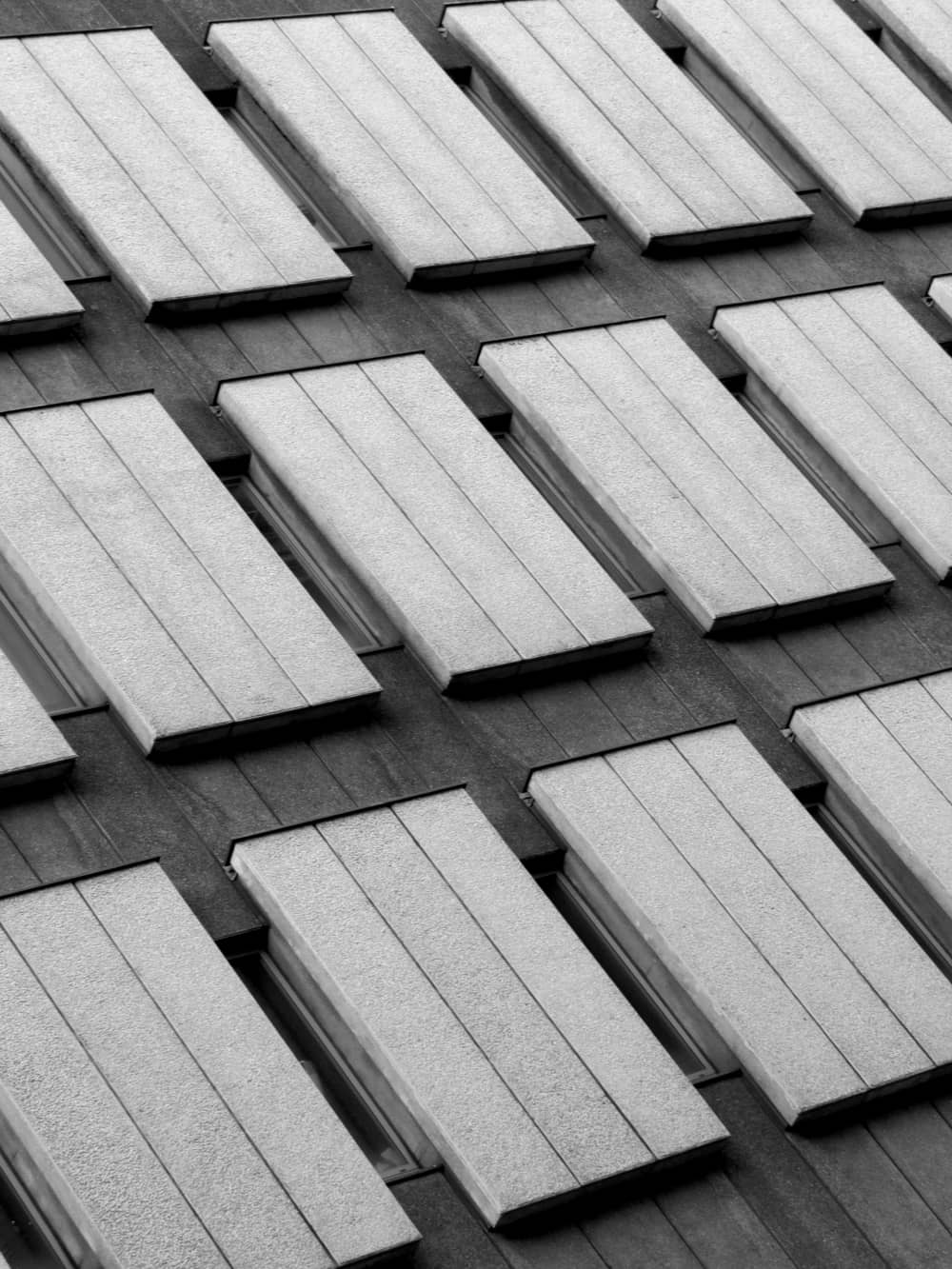
Start with the scale of the wall
Concrete is often described as a single uninterrupted mass, but its surface records a sequence of decisions. Stand back first. Look for repeated panel dimensions, horizontal pour lines, and the rhythm of openings. These larger relationships help distinguish a deliberate pattern from an isolated blemish.
Move closer only where access is safe and permitted. A photograph with a familiar object nearby can suggest scale, but do not treat a perspective image as a measured drawing. Note what you can see, what you infer, and what would need a drawing or specification to confirm.
Read a mark without overdiagnosing it
The grain of board formwork, the outline of a panel, and the circular recess of a tie hole can remain visible after casting. Their arrangement may explain how a wall was made. A smooth finish is not necessarily more carefully constructed than a textured one; the intended finish matters.
Color differences can come from materials, curing conditions, moisture, repairs, or light. A photograph alone rarely establishes the cause. Likewise, a crack is not a diagnosis. Record its location and context without deciding from appearance alone whether it has structural significance. Any safety concern belongs with a qualified professional.
Follow water and contact
Look at the top of a wall, window sills, and the base where it meets the ground. Water often makes the logic of a detail visible: streaks below an edge, a darker patch under a projection, or splash marks along a footpath. Compare sheltered and exposed areas before describing the whole material as weathering badly.
A useful field record pairs an overall view with a close view and a short sketch of the edge. Add orientation, recent weather, and the limits of access. This makes the observation repeatable without pretending it is a condition survey.
Questions to take back to the desk
Was the surface cast against boards or reusable panels? Where are movement and construction joints? How does a projecting element shed water? Are replacement or repair areas visible? These questions lead to research more productively than assigning a style label.
Keep the record descriptive. Workshop Index is a reference for looking and comparing, not a substitute for project specifications, testing, or engineering assessment. A good observation makes the next question clearer.